STANDARD COMBINED ROLLER BEARINGS
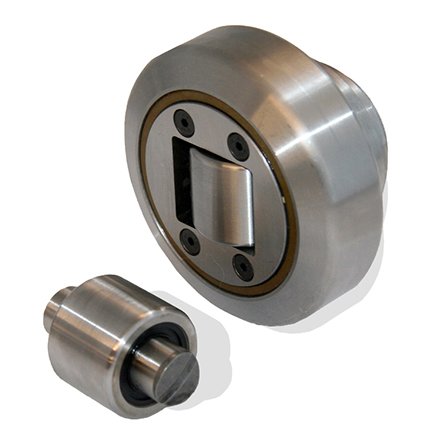
Engineering Overview
Standard Combined Roller Bearings are heavy-duty linear guide bearings specifically engineered to support both radial and axial loads simultaneously. Unlike conventional track rollers or cam followers, this bearing assembly incorporates an integrated axial roller within the main radial roller, enabling it to withstand high lateral loads and run smoothly within the matching steel profile. By integrating two bearings into a single unit, combined roller bearings provide a compact yet incredibly robust solution for moving heavy loads in horizontal, vertical, cantilevered or telescopic linear motion applications.
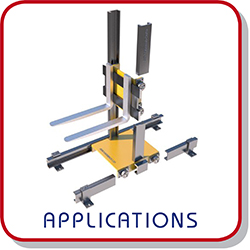
Originally designed for forklift trucks, Combined Roller Bearings (also referred to as "Combi Bearings", "Combined Rollers" or "Combined Bearings") are now widely used in telescopic handling equipment, automated production machinery, transfer systems and other demanding linear motion applications where high load capacity, accurate guidance and long service life are required. See our application examples for inspiration.
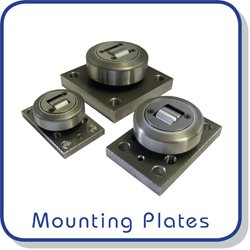
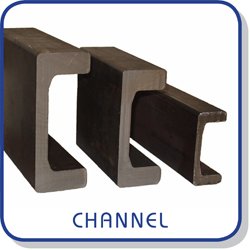
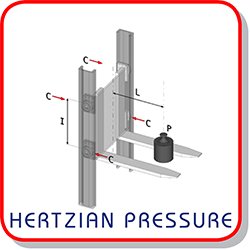
Each bearing has a corresponding steel section (channel) and is available with a mounting plate for ease of assembly. Calculate which size you need using Hertzian Pressure with our new Online Calculator.
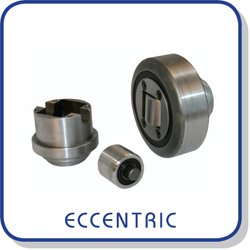
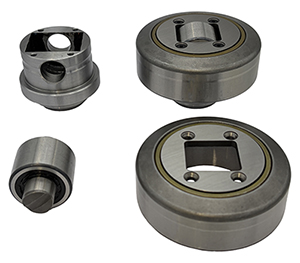
Bearings are available from stock in the standard range shown here. Other ranges include adjustable, precision and Jumbo types.
The information in the table below provides dimensional data, downloadable CAD models, technical datasheets and selection guidance to help engineers choose the correct bearing for their application.
Read our technical information on Combined Roller Bearings or or consult our "How to" Guide. When corrosion resistance is required, the bearings and mounting plates can be supplied with Thin Dense Chromium (TDC) Coating.
En Français? Voir notre catalogue ici. 
A Standard Combined Roller Bearing has three components - the weldable hub, the integrated axial roller and the main radial roller.
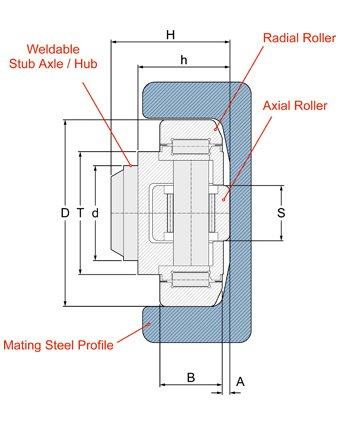
The table below lists the standard combined roller bearings in the 4.05x and 4.06x series. These heavy duty bearings are often used in forklift masts, lifting equipment and linear guidance systems. For each bearing, the table provides the part number, principal dimensions and corresponding product references. Click on the part number to view detailed specifications for each bearing.
| Part Number | D | T | d | H | h | B | A | S | r | Profile | Plate | 3D Cad | Data Sheet |
|---|---|---|---|---|---|---|---|---|---|---|---|---|---|
| 4.053 | 52.5 | 40 | 30 | 33 | 27 | 17 | 2 | 15 | 2 | EC053 | PL00 |  |
 |
| 4.054 | 62 | 42 | 30 | 37.5 | 30.5 | 20 | 2.5 | 20 | 3 | 2890 | PL0 |  |
 |
| 4.055 | 70.1 | 48 | 35 | 44 | 36 | 23 | 2.5 | 22 | 4 | 2867 3018 |
PL1 | |
|
| 4.056 | 77.7 | 54 | 40 | 48 | 36.5 | 23 | 3 | 24 | 4 | 2810 | PL2 | |
|
| 4.057 | 77.7 | 53 | 40 | 40 | 29 | 23 | 3 | 24 | 4 | 3019 | - | |
|
| 4.058 | 88.4 | 59 | 45 | 57 | 44 | 30 | 3.5 | 26 | 3 | 2811 3020 |
PL3 | |
|
| 4.059 | 101.2 | 67 | 50 | 46 | 33 | 28 | 3 | 30 | 3 | 2912 | - | |
|
| 4.060 | 107.7 | 71 | 55 | 54 | 40 | 31 | 4 | 34 | 5 | 3100 | - | |
|
| 4.061 | 107.7 | 71 | 60 | 69 | 55 | 31 | 4 | 34 | 5 | 2862 | PL4 | |
|
| 4.062 | 123 | 80 | 60 | 72.3 | 56 | 37 | 5 | 40 | 5 | 2891 3353 |
PL4 | |
|
| 4.063 | 149 | 103 | 60 | 78.5 | 58.5 | 45 | 5.5 | 50 | 3 | 2757 | PL6 | |
|
| 4.011 | 149 | 108 | 60 | 86 | 67 | 45 | 5.5 | 50 | 3 | 2757 | PL6 | |
|
All dimensions are in mm and loads are in kN.
Note: All lube points are for M6 grease nipples (not supplied).
4.053 & 4.054 do not have grease holes.
LOAD CAPACITIES
Static and Dynamic Load Capacities for radial and axial rollers. If used with mating steel profile, the limiting load is the Hertzian Pressure.
| Part Number | C | C0 | Ca | C0a |
|---|---|---|---|---|
| 4.053 | 24 | 32 | 7 | 7 |
| 4.054 | 31 | 35.5 | 11.1 | 11.5 |
| 4.055 | 45.5 | 51 | 14 | 13 |
| 4.056 | 48 | 56.8 | 18 | 18 |
| 4.057 | 48 | 56.8 | 18 | 18 |
| 4.058 | 68 | 72 | 23 | 23 |
| 4.059 | 73 | 82 | 25 | 27 |
| 4.060 | 81 | 95 | 31 | 36 |
| 4.061 | 81 | 95 | 31 | 36 |
| 4.062 | 110 | 132 | 43 | 50 |
| 4.063 | 151 | 192 | 68 | 71 |
| 4.011 | 151 | 192 | 68 | 71 |
C = Dynamic Load Capacity for Radial Roller
C0 = Static Load Capacity for Radial Roller
Ca = Dynamic Load Capacity for Axial Roller
C0a = Static Load Capacity for Axial Roller
How to Select the Correct Standard Combined Roller Bearing
Selecting the correct Combined Roller Bearing requires careful consideration of the applied loads and the arrangement of the bearings. The following procedure is recommended and the Online Calculator also provides guidance.
1. Define the application.
Determine whether the system operates horizontally, vertically,
cantilevered or telescopically.
2. Determine the loads and any moment arms (distances).
Determine all operating loads including static and dynamic forces. For cantilevered applications, the moment arm(s) must also be included.
3. Calculate the load on each bearing.
Consider load distribution across multiple bearings. Often this is straightforward but live loads and asymmetical loads can complicate it.
4. Check Hertzian Pressure.
Use our
Hertzian Pressure Calculator
to check the contact stress or calculate it manually.
See the worked example for guidance
5. Select the smallest suitable bearing using Hertzian Pressure.
Compare the calculated loads with the published Hertzian Pressure Table to select the bearing. The Hertzian Pressure is the limiting factor.
6. Select the matching steel profile.
Use the profile listed in the product table.
7. Select the mounting plate.
Choose the correct mounting plate (or opt to weld the bearing directly to the structure).
8. Download the CAD model.
Verify installation dimensions using the STEP file.
9. Contact Euro-Bearings Ltd for a quote or further guidance.
Contact our knowlegable Technical Sales Team.
Full technical guidance can be found in our Combined Roller Bearing "How to" Guide.
Related Products and Links